

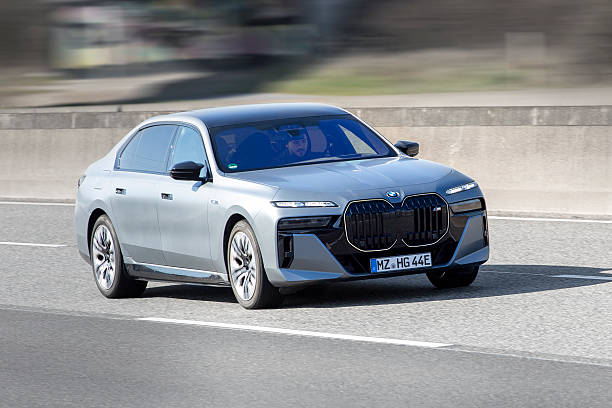
Luxury cars have a unique quality. Everything about them feels magical, including the way they move smoothly on the road, the quiet inside the cabin, and the power that reacts instantly when you press the accelerator. However, years of technological advancements that transform a straightforward drive into an amazing experience are what underlie that magic. The world of cutting-edge automotive technology that defines what it means to drive in genuine comfort, safety, and style is explored in-depth in this comprehensive guide, Luxury Car Technology Features Explained.
Everything feels different when you get into a luxury vehicle. The lighting changes according to your mood, the sound system seems to know exactly how to envelop you in music, and the seats are incredibly comfortable. You are surrounded by an engineering marvel that is intended to anticipate all of your needs, not just the car you are sitting in. However, how does all of this operate? And what distinguishes these technologies from ordinary automobiles?
Let’s start by going over the features of luxury cars in detail, from intelligent interiors to cutting-edge driving systems that combine performance, intelligence, and emotion in contemporary automobiles.
1. The Evolution of Luxury Car Technology
From mechanical precision to digital intelligence, the history of luxury car technology is one of evolution. In the beginning, luxury only meant comfort and fine craftsmanship. Cars with powerful engines, smooth rides, and exquisitely designed interiors were produced by brands like Rolls-Royce, Mercedes-Benz, and Cadillac. However, technology started to become more significant over the years.
Features like power seats, anti-lock braking, and automatic climate control emerged as symbols of sophistication in the 1980s and 1990s. In the modern era, luxury automobiles resemble rolling computers. These days, sustainability, automation, connectivity, and artificial intelligence are important components of their design.
Luxury is no longer about leather and chrome; it’s about how seamlessly the car can understand, protect, and comfort you.
2. Intelligent Infotainment Systems
The infotainment system is one of the most distinctive aspects of contemporary luxury automobiles. It is now the vehicle’s brain, not just a radio or navigation screen. Entertainment, climate control, driver settings, and even communication are all connected by the infotainment system in models from Mercedes-Benz, Audi, Lexus, and BMW.
Innovative systems include Audi’s MMI, BMW’s iDrive, and Mercedes’ MBUX. To create a smooth interface between the driver and the vehicle, they make use of gesture control, touch screens, and voice recognition. The car will change the temperature for you if you say, “Hey Mercedes, I’m cold.” Alternatively, you can use BMW’s gesture control to adjust the music volume by merely waving your hand in front of the screen.
This kind of integration makes driving both effortless and enjoyable. It feels personal — like the car knows you.
3. Advanced Driver Assistance Systems (ADAS)
In the automotive industry, safety has always been a top priority, and luxury automakers have elevated it to a fine art. Technologies known as advanced driver assistance systems, or ADAS, are intended to make driving easier, safer, and more predictable.
These consist of collision avoidance systems, adaptive cruise control, lane-keeping assistance, blind-spot monitoring, and traffic sign recognition. A network of cameras, radar sensors, and LiDAR systems are used by contemporary luxury cars to keep an eye on everything surrounding them.
For example, on highways, Mercedes’ Drive Pilot, BMW’s Driving Assistant Professional, and Tesla’s Autopilot can partially take over the vehicle, automatically modifying the steering and speed. In addition to making driving easier, this technology lowers fatigue, lowers the risk of collisions, and increases driver-machine trust.
However, the ease with which these systems function together may be what distinguishes luxury cars. You don’t feel interrupted or distracted; the car quietly supports you, allowing you to focus on the joy of driving.
4. Adaptive Suspension and Ride Comfort
One of the best things about a luxury car is how comfortable it is to drive. The suspension system controls how smooth your ride is, whether you’re speeding down the highway or navigating a city street.
Air suspension or adaptive suspension systems used by luxury brands are always adapting to the road conditions. Range Rover’s Terrain Response, Audi’s adaptive air suspension, and Mercedes-Benz’s AIRMATIC are all excellent examples. In order to maintain comfort, these systems automatically adjust the stiffness, ride height, and damping based on sensor data from the road surface.
To put it simply, the car senses a bump before you do.
Some systems even use cameras to scan the road ahead and prepare the suspension for what’s coming. The result? A magic-carpet-like feeling that makes even long drives feel effortless.
5. Ambient Lighting and Emotional Design
Emotion is just as important to luxury as performance. For this reason, a lot of luxury vehicles now have ambient lighting systems that can be customized.
To create the ideal mood, you can select from dozens of different lighting colors and brightness levels inside a Mercedes S-Class or BMW 7 Series. Warm gold tones could make the cabin feel elegant and comfortable, while soft blue lighting could make your nighttime drive peaceful and tranquil.
These lighting systems have psychological effects in addition to being purely ornamental. Colors affect our mood, according to studies, and luxury automakers use this knowledge to create more emotional driving experiences.
6. Sound Systems that Redefine Music
Driving and listening to music go hand in hand for true car enthusiasts. Because of this, luxury cars have sound systems that can transform your cabin into a concert venue.
Automakers work with brands like Burmester, Bang & Olufsen, Bose, and Mark Levinson to create audio systems that are specific to each model of vehicle. The cabin’s microphones automatically adjust frequencies by analyzing sound reflections. Some systems even use ceiling-mounted speakers to produce 3D sound.
In a Rolls-Royce, the sound insulation is so perfect that every note feels pure. In a Lexus LS, the Mark Levinson system can make even a whisper sound crystal clear. This is technology used not for performance, but for emotion — a way to make every journey feel cinematic.
7. Climate Control and Personalized Comfort
Luxurious cars create the ideal cabin atmosphere in addition to heating or cooling the air. Every passenger can choose their ideal temperature thanks to multi-zone climate control. To keep the air fresh, sophisticated air filtration systems eliminate dust, allergens, and even smells.
The Mercedes S-Class has a feature called Energizing Comfort that creates a full sensory experience by combining ambient lighting, massage seats, temperature control, and fragrance diffusion. Your mood can literally be changed by the car, which can energize you for a lengthy journey or help you unwind after a stressful day.
This personalization of comfort is what truly separates luxury cars from the rest. They make you feel cared for.
8. Seats Designed for Human Perfection
The seats in your car are more important than you may think when you spend hours behind the wheel. The seats in high-end cars are works of art. In order to design seats that support every muscle and curve, manufacturers spend years researching human anatomy.
The best models come with memory foam padding, heating, cooling, massage, and adjustable lumbar support. Some even go farther: Mercedes has a built-in “hot stone massage” feature, while Rolls-Royce hand-stitches its seats using precise leatherwork.
Sitting in a luxury car feels just as important as driving. Every element, including the leather’s softness and stitching designs, is designed to give the driver a sense of control and relaxation.
9. Connectivity and Smart Integration
Convenience in today’s digital world is defined by connectivity. These days, luxury cars can update themselves, talk to your smartphone, and even predict your needs thanks to internet connectivity.
Using your phone, you can check the fuel level, remotely start your car, and pre-heat the cabin. While integrated voice assistants link you to the cloud for real-time information, navigation systems use real-time data to find faster routes.

With over-the-air updates that enhance performance and add new features without requiring a trip to the dealership, Tesla, BMW, and Mercedes have elevated connectivity to a new level. The concept of a car that changes over time is not futuristic; it is already a reality.
10. Performance Technology and Engine Innovation
Comfort is only one aspect of luxury; performance is another. Under the hood, luxury vehicles blend intelligent engineering with unadulterated power. The ideal ratio of speed, efficiency, and refinement is guaranteed by twin-turbocharging, hybrid-electric systems, and lightweight materials.
Advanced performance features like torque vectoring, adaptive all-wheel drive, and launch control are found in sports-luxury vehicles like the BMW M8 and Porsche Panamera. These features give the driver complete control over every road.
By adjusting power delivery in real-time to your driving style and environment, these systems not only make cars faster but also smarter.
11. Artificial Intelligence in Modern Luxury Cars
Artificial intelligence has redefined what it means to drive. In a luxury car, AI doesn’t just follow commands; it learns from you. It studies your habits, understands your preferences, and anticipates your needs before you even think about them.
For instance, BMW’s Intelligent Personal Assistant remembers your seat settings, climate choices, and favorite destinations. Over time, it learns your routine — when you drive to work, which routes you take, and what kind of music you like on Monday mornings. It adjusts automatically, so every drive feels uniquely personal.
Mercedes-Benz’s MBUX system is another example. It can understand natural language, not just commands. If you say, “I’m tired,” it might adjust lighting, temperature, and even play soothing music to help you relax. AI gives luxury cars a human touch, transforming them from machines into companions.
12. Autonomous and Semi-Autonomous Driving
Luxury cars are leading the way in autonomous driving. While full self-driving is still being perfected, many high-end brands already offer advanced semi-autonomous systems that can handle most driving tasks.
Mercedes Drive Pilot, for example, can manage acceleration, braking, and steering on highways, while monitoring road signs and traffic. Similarly, Audi’s Adaptive Cruise Assist uses radar and cameras to maintain safe distances and keep the car centered in its lane.
The goal of these systems isn’t to take control away from the driver but to create a more relaxing and secure experience. You remain in charge, but the car helps with precision and safety — especially on long journeys.
Luxury car brands are also exploring Level 4 autonomy, where vehicles can operate independently in specific environments, such as parking garages or traffic jams. The combination of radar, LiDAR, and high-definition mapping creates an invisible safety net around the vehicle, making driving more effortless than ever.
13. Lighting Technology Beyond Illumination
In luxury vehicles, lighting is no longer just for visibility — it’s an artistic expression. Advanced headlight systems like Audi’s Digital Matrix LED or BMW’s Laserlight use millions of tiny mirrors to project light with incredible accuracy.
These systems automatically adjust the beam to avoid blinding oncoming traffic while maintaining maximum visibility for the driver. Some can even project symbols on the road, such as arrows or warnings, to assist in navigation.
Inside the cabin, lighting plays a different role. Ambient illumination synchronizes with driving modes, music, or even your heartbeat. In some models, such as the Mercedes S-Class, lighting pulses gently to signal incoming calls or alerts, integrating safety and emotion into one visual language.
14. Electric Powertrains and Sustainable Luxury
The definition of luxury is changing. Today’s affluent car buyers not only expect power and comfort but also sustainability. Electric vehicles (EVs) are now the new face of luxury, and technology is at the heart of this transformation.
Brands like Porsche, BMW, Audi, and Mercedes have invested heavily in electric mobility. The Porsche Taycan, for example, blends raw performance with silent elegance, offering over 700 horsepower and instant acceleration — all while producing zero emissions.
Battery technology has evolved to provide long range and fast charging. Meanwhile, interiors are now designed with sustainable materials such as vegan leather, recycled plastics, and natural fibers, without compromising on luxury or aesthetics.
Driving an electric luxury car doesn’t mean sacrificing passion. It means embracing innovation with conscience — performance with purpose.
15. Augmented Reality (AR) and Head-Up Displays
One of the most fascinating advances in luxury cars is the use of augmented reality. Modern head-up displays project key information directly onto the windshield, blending digital data with real-world visuals.
Imagine driving and seeing your navigation arrows appear directly on the road ahead — that’s AR in action. BMW and Mercedes use AR to overlay directions, safety warnings, and speed limits onto your line of sight, allowing you to focus fully on the drive.
This technology enhances awareness, reduces distraction, and creates a futuristic yet natural driving experience. It’s like having a co-pilot who shows you the way, quietly and efficiently.
16. Voice and Gesture Control Systems
Touchscreens are now joined by voice and gesture controls, adding layers of convenience and elegance. In luxury cars, you don’t have to take your hands off the wheel to interact with the system. You can wave your hand to skip a song, rotate your finger to change the volume, or simply speak to adjust settings.
These systems are not just for show — they redefine safety and simplicity. The less time your eyes spend on screens, the safer your drive becomes. The technology feels intuitive, merging human instinct with machine intelligence.
17. Advanced Safety Systems and Predictive Technology
Luxury cars are built to protect. Predictive safety systems use sensors, cameras, and AI to anticipate potential collisions before they happen. Some vehicles can even tighten seatbelts, close windows, and adjust suspension height moments before impact to minimize damage.
Mercedes’ PRE-SAFE system is one of the most advanced. It can detect impending danger and prepare the car’s structure for a crash. Volvo’s Pilot Assist and Tesla’s Autopilot do the same by maintaining safe distances and reading traffic movement.
Even braking systems are becoming smarter. Regenerative braking, used in electric and hybrid models, not only slows the car but also recharges the battery — turning safety into sustainability.
18. The Role of Over-the-Air Updates
One of the biggest breakthroughs in recent years is over-the-air (OTA) software updates. Much like smartphones, luxury cars now receive performance improvements, new features, and security upgrades remotely.
Tesla pioneered this concept, and brands like BMW, Audi, and Mercedes have followed. For drivers, it means their cars are constantly improving, learning, and evolving — even while parked in the garage.
This feature extends the life and value of luxury vehicles, keeping them fresh and modern long after they leave the showroom.
19. The Future: Emotion, AI, and Human Connection
The next era of luxury cars is about emotion — about cars that understand how you feel and respond accordingly. Future vehicles may detect your stress level through facial recognition or heart rate sensors and automatically adjust seat position, lighting, or even play your favorite music to calm you down.
Artificial intelligence will continue to deepen this relationship, creating cars that aren’t just machines but partners. The luxury car of the future will be more than transportation; it will be an extension of your personality, your lifestyle, and your state of mind.
Imagine entering your car after a long day, and it already knows you need a moment of peace. The cabin glows softly, your seat reclines slightly, and a gentle tune begins to play — not because you asked, but because it understands. That is the essence of true luxury.
20. Why Technology Defines Modern Luxury
Luxury used to mean exclusivity and craftsmanship. Today, it means intelligence, personalization, and emotion. The best luxury cars in the world no longer just look stunning — they think, feel, and adapt.
Every feature, from the precision of its steering to the whisper of its sound system, is designed to connect with the driver. The technology behind it all exists not to impress, but to enhance life — to make every drive feel effortless and meaningful.
Conclusion: The Heart of Innovation
In understanding luxury car technology features explained, we realize that the heart of innovation lies in how these machines make us feel. The quiet power, the comfort that molds to your body, the intelligence that anticipates your next move — it all comes together to create an experience that’s emotional, not just mechanical.
Luxury cars are no longer simply vehicles; they are masterpieces of human imagination and engineering brilliance. They remind us that technology, when used beautifully, can be more than function — it can be poetry in motion.
As we look toward the future, one thing remains clear: the soul of luxury will always live in the details — the craftsmanship, the innovation, and the way a car makes you feel truly alive.
