

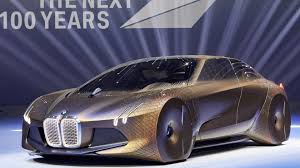
Introduction:
Supercars have represented unadulterated power, beauty, and the pinnacle of driving excitement for many years. They were the highway’s roaring beasts, machines that, as soon as their engines started, made people’s hearts race. However, a new era is upon us, one in which these amazing machines are not only quick but also intelligent.
Science fiction no longer applies to the autonomous supercar concept features that we are starting to see in 2025 and beyond. They symbolize an intriguing union of two worlds: the serene, strategic intelligence of artificial intelligence and the wild, exhilarating energy of a supercar.
Imagine a car that understands you, senses the road beneath it, anticipates danger before it materializes, and provides speed—not just as an exhilarating experience, but as a masterfully designed one. Autonomous supercars promise that. And while some worry that we might lose the essence of driving, others think we are getting something truly unique: machines that comprehend us in addition to moving us.
The Evolution of the Supercar Dream
Engines used to be the defining characteristic of supercars. The very pulse of performance culture was the thunder of a Bugatti, the roar of a Ferrari, or the scream of a Lamborghini. However, things are changing. The future of supercars is about intelligence, not just horsepower, due to consumer demand for smarter machines, technological advancements, and climate concerns.
Steps in the direction of this future have already been taken. We now know what performance without gasoline looks like thanks to electric hypercars like the Rimac Nevera. Tesla demonstrated that electric vehicles could outspeed combustion engines. Manufacturers are now posing the question, “Why can’t we make a supercar autonomous if we can electrify it?”
Thus, the idea of features for autonomous supercars was born. Combining incredible speed with a brain that can match the reflexes of even the best human driver is the next evolution.
What Makes a Supercar “Autonomous”?
The term “autonomous” refers to more than just self-driving cars. It refers to a machine that is capable of perception, analysis, and action without the need for human input. Autonomy in supercars enhances the driving experience rather than taking the place of the driver.
Here’s how autonomy is applied in supercar concepts:
- Advanced Sensor Systems – Autonomous supercars rely on a suite of lidar, radar, ultrasonic sensors, and high-definition cameras to see the road in ways humans never can.
- AI Decision-Making – A powerful onboard AI processes billions of data points per second to make driving decisions instantly.
- Predictive Safety – Instead of reacting after danger appears, autonomous systems predict risks in advance and prepare for them.
- Adaptive Performance – Unlike traditional supercars, these vehicles can adjust suspension, aerodynamics, and power delivery in real time to maximize both safety and thrill.
Think of it this way: teaching a normal car to drive itself is like teaching a human to walk. But teaching a supercar to drive itself? That’s like teaching a cheetah not just to run—but to think.
Core Autonomous Supercar Concept Features
1. AI Driving Systems
Artificial intelligence is at the core of any self-driving supercar. Neural networks installed in these vehicles can learn weather patterns, road conditions, and even driver behavior. The AI anticipates rather than merely reacts. It is aware of when to release the full force of the engine, when to hold back, and when to accelerate smoothly.
2. Smart Cockpits
Forget about standard dashboards. Augmented reality cockpits in autonomous supercars project holographic screens onto the windshield. In order to keep the drive balanced, these displays do more than just show speed; they also show virtual obstacles, predictive racing lines, and even emotional information like your stress levels.
3. Performance Algorithms
Autonomous supercars employ adaptive performance algorithms in place of fixed driving modes like “Sport” or “Comfort.” These systems make real-time adjustments to aerodynamics, power distribution, and suspension stiffness. The car perfectly shapes itself whether you’re racing on a track or just driving around the city.
4. Predictive Safety Enhancements
Supercars have always been difficult to keep safe because of their extreme power. Safety with autonomy is about prevention, not just airbags. Predictive AI is used by the vehicle to prevent collisions before they occur. It is aware of when a pedestrian is likely to cross the street, when a car may change lanes, and when your reflexes won’t be sufficient.
In essence, autonomous supercar features are like having a guardian angel coded in silicon.
Design Innovations: Beauty Meets Brain
Supercars have always been rolling works of art. But now, design is influenced not just by aesthetics, but by AI compatibility.
- Aerodynamic Intelligence: Active aerodynamics that shift automatically, optimizing airflow for both manual and autonomous driving.
- Interactive Interiors: Cabins with voice-activated assistants, gesture controls, and biometric recognition. The car can literally recognize you by your heartbeat.
- Luxury Meets Emotion: The interiors are designed to respond to your mood—changing lighting, adjusting seating, and even playing calming sounds when stress levels rise.
It’s not just a car; it’s a living space that feels alive.
Comparison: Traditional Supercars vs Autonomous Concepts
| Feature | Traditional Supercar | Autonomous Concept Supercar |
|---|---|---|
| Driving Control | Fully human-driven | AI-assisted or fully autonomous |
| Safety | Driver-dependent | Predictive AI + fail-safes |
| Cabin | Driver-focused | Smart, adaptive, interactive |
| Performance | Manual skill | AI-optimized handling |
| Technology | Basic infotainment | AR, AI copilots, biometric systems |
This table shows one truth: autonomy doesn’t make supercars boring—it makes them smarter.
The Emotional Appeal of Autonomous Speed
The question of whether autonomy will destroy the essence of driving is up for debate among enthusiasts. Isn’t the control, skill, and adrenaline of pushing yourself to the limit what makes a supercar so exciting?
There are two possible answers: yes and no. The joy of gripping the wheel, feeling the tires grip, and listening to the engine sing are some moments that will always be unique to humans. However, autonomous features do not negate that. Rather, they add another layer: the assurance that your machine is watching out for you, the freedom to push past human limits when it’s safe to do so, and the ability to unwind when you want to.
It’s more important to redefine passion than to replace it.
Case Studies: Futuristic Prototypes
Audi AI:Race Concept
Audi introduced the AI:Race as a glimpse into the future—a car that could be driven traditionally or fully autonomously. It featured a sliding cockpit seat that let the driver sit in the center during autonomous mode, like being a passenger in your own spaceship.
Mercedes Vision AVTR
The Mercedes Vision AVTR concept wasn’t just a car; it was a living organism on wheels. With biometric recognition, gesture controls, and organic design, it blurred the line between machine and living being.
Rimac Nevera (Semi-Autonomous Testing)
While not fully autonomous, the Rimac Nevera introduced AI coaching systems that taught drivers how to improve their racing lines in real-time—a powerful step toward autonomy in hypercars.
These prototypes prove one thing: autonomous supercars are not just possible—they are inevitable.
Technology That Powers the Dream
Autonomous supercar features rely on a symphony of technologies working together:
- Electric Powertrains – providing instant torque and smoother AI-controlled acceleration.
- Machine Learning Algorithms – learning from each drive, adapting, and improving.
- 5G Connectivity – allowing cars to talk to each other and the road infrastructure in real-time.
- Biometric Feedback Systems – monitoring driver health, stress, and focus to optimize the experience.
It’s not just technology for technology’s sake—it’s technology that feels emotional, intuitive, and deeply human.
Sustainability Meets Supercars
Supercars were decried as gas-guzzlers and symbols of excess for many years. Autonomous concept supercars, however, are changing the narrative. They are an environmentally friendly luxury thanks to their electric drivetrains, recycled materials, and clever efficiency systems.
Imagine a vehicle that produces no emissions while simultaneously providing you with an exhilarating 200 mph ride. That’s redemption, not just progress.
Challenges Facing Autonomous Supercars
Of course, this dream isn’t without obstacles:
- Legal Hurdles – Many countries still don’t allow Level 4 or 5 autonomy on public roads.
- Ethical Questions – How should an autonomous supercar react in a life-or-death scenario?
- Safety at High Speeds – Handling autonomy at 200 mph is vastly harder than at 60 mph.
- Cultural Resistance – Some enthusiasts will never accept that AI belongs in a supercar.
The road ahead is difficult, but every revolution faces resistance.
The Lifestyle of Tomorrow’s Supercar Owner
Identity is more important than prestige when it comes to owning an autonomous supercar. “I own the future” will be a status symbol for some. Others will have to trust that their machine can keep their family safe at all times.
These vehicles will be more than just trophies for the garage. They will be devoted guardians and companions, machines that adjust to their owners.
Price and Market Expectations
Supercars that drive themselves won’t be inexpensive. Only elite collectors will be able to afford the early models, which are expected to cost several million dollars. However, as technology advances, costs might decrease, potentially making the magic accessible to a larger audience.
Future Beyond 2025: A Glimpse Ahead
What comes after autonomous supercars?
- Track-Only AI Hypercars – built for pure racing, with no human input required.
- Flying Supercars – concepts that blend aviation with autonomy.
- Emotionally Intelligent Cars – machines that can sense human feelings and respond with empathy.
The future of supercars is not just speed. It’s imagination made real.
Conclusion: The Soul of Tomorrow’s Machine
One thing is evident as we examine the autonomous supercar concept features that will shape the future: driving passion is not dying; rather, it is reviving.
Future supercars will think, anticipate, and defend in addition to roaring. They will provide us with performance with intelligence, luxury with sustainability, and speed with safety.
We will not be replaced by machines in the future. It’s about machines enabling us to achieve more than we ever imagined.
The world won’t merely observe when the first completely self-driving supercar hits the road; it will sense its heartbeat echoing in ours.
