

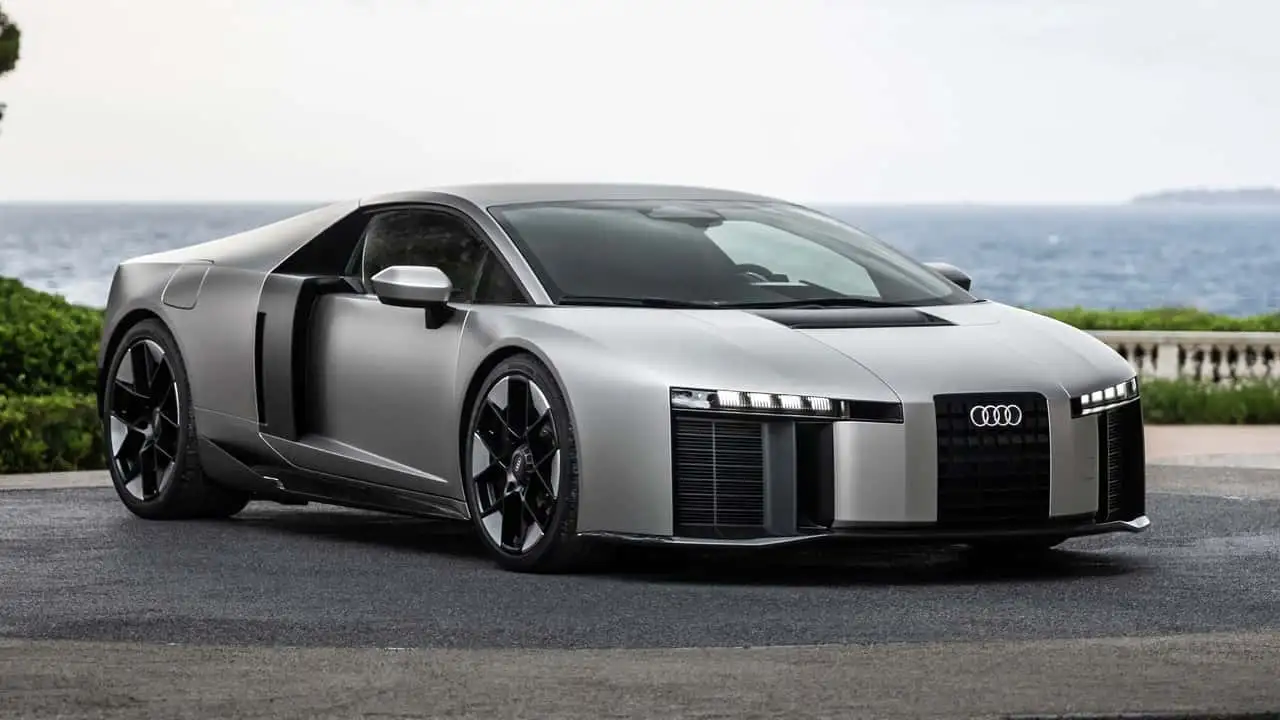
Audi has surprised the automotive world with an extraordinary development story. The new Audi Nuvolari was taken from a blank sheet of paper to a production-ready prototype in just 405 days, an unusually short timeline for a high-performance car. Audi says the project represents a new approach to development, with faster decision-making, close international cooperation and a strong focus on bringing new technology to the road quickly. (audi.com)
The result is not simply another design study. The Nuvolari is a near-production supercar that combines a twin-turbocharged V8 with three electric motors, advanced all-wheel drive, active aerodynamics and extensive carbon-fiber construction. Audi plans to build only 499 examples, with customer deliveries scheduled for the first half of 2027. (audi.com)
The Remarkable 405-Day Development
Developing a new performance car normally involves years of design, engineering, testing and validation. Audi’s approach with the Nuvolari was dramatically different.

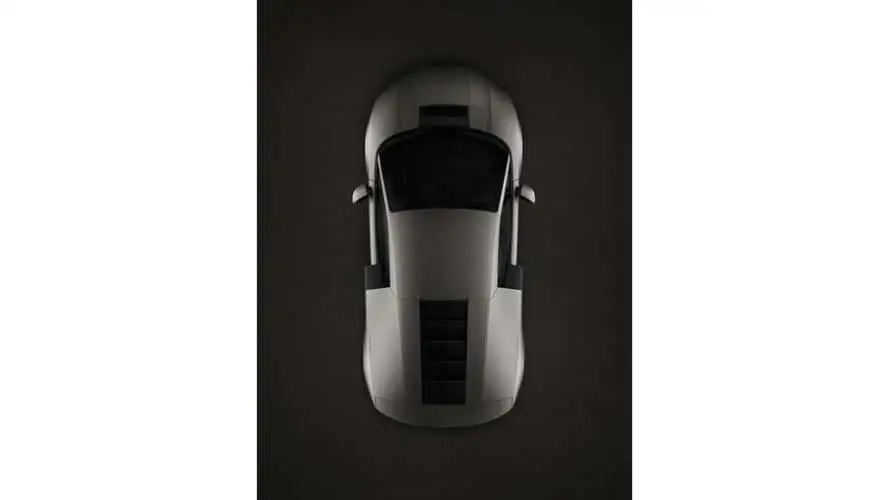
According to Audi personnel involved in the project, only 405 days passed between the beginning of the project and the public presentation of the production-ready car. Oliver Keyerleber, one of the project leaders, described the timeline as an extremely ambitious challenge, emphasizing how quickly the team had to make decisions and move from ideas to a physical vehicle. (LinkedIn)
That speed was not achieved by simply skipping development stages. Instead, Audi describes the Nuvolari project as an example of a faster development process built around close cooperation between design, engineering and other technical teams.
The company is now testing prototypes under demanding conditions, including locations such as the Nürburgring and the Nardò proving ground. These tests are intended to refine the car before production begins. (audi.com)
A Supercar With Nearly 1,000 Horsepower
The Nuvolari’s development speed is impressive, but its technical specification is arguably even more remarkable.
Audi has equipped the car with a 4.0-liter twin-turbocharged V8 producing 800 horsepower, supported by three axial-flux electric motors. Together, the hybrid powertrain produces a maximum system output of 736 kW, or 1,001 PS. (audi.com)
The combustion engine produces up to 730 Nm of torque and can rev to 10,000 rpm. Two electric motors are positioned at the front axle, while a third motor is integrated between the V8 engine and transmission.
This combination gives the Nuvolari performance figures that place it firmly in supercar territory. Audi claims a 0-100 km/h time of 2.6 seconds, while the top speed is more than 350 km/h. (audi.com)
In other words, the 405-day development program produced a car capable of competing with some of the world’s most serious performance machines.
The Technology Behind the Speed
One of the most interesting technologies introduced with the Nuvolari is Audi’s quattro predictive ride system.
Rather than simply reacting after traction begins to disappear, the system uses information such as steering angle, acceleration, yaw rate and available grip to anticipate how the vehicle is behaving. It can then coordinate the powertrain, braking, torque distribution and aerodynamics to improve stability and cornering performance. (audi.com)
The two front electric motors are particularly important because they allow Audi to control torque at the front wheels independently. This gives the system additional freedom to influence the car’s behavior during cornering.
The technology reflects Audi’s long history with quattro. Interestingly, the company also used the Nuvolari name for its Nuvolari quattro two-door coupé concept shown at the 2003 Geneva Motor Show, a car that helped point toward the later Audi A5. (audi.com)
Formula 1 Influence
Audi is also using the Nuvolari to showcase technology influenced by its growing Formula 1 involvement.
The car features active aerodynamics, including an adjustable rear wing designed to change its position according to driving conditions. The system can prioritize lower drag on straights or greater downforce when braking and cornering.
The Nuvolari also uses carbon-fiber-intensive construction. Audi says almost all of the exterior components are made from carbon-fiber-reinforced polymer, while production techniques associated with motorsport are being used in the manufacturing process. (Road & Track)
This approach helps explain why Audi describes the Nuvolari as more than a traditional luxury coupe. It is intended to demonstrate how racing-inspired technology can influence a road-going supercar.
A New Direction for Audi Design
The Nuvolari is also important because it introduces elements of Audi’s new design direction.
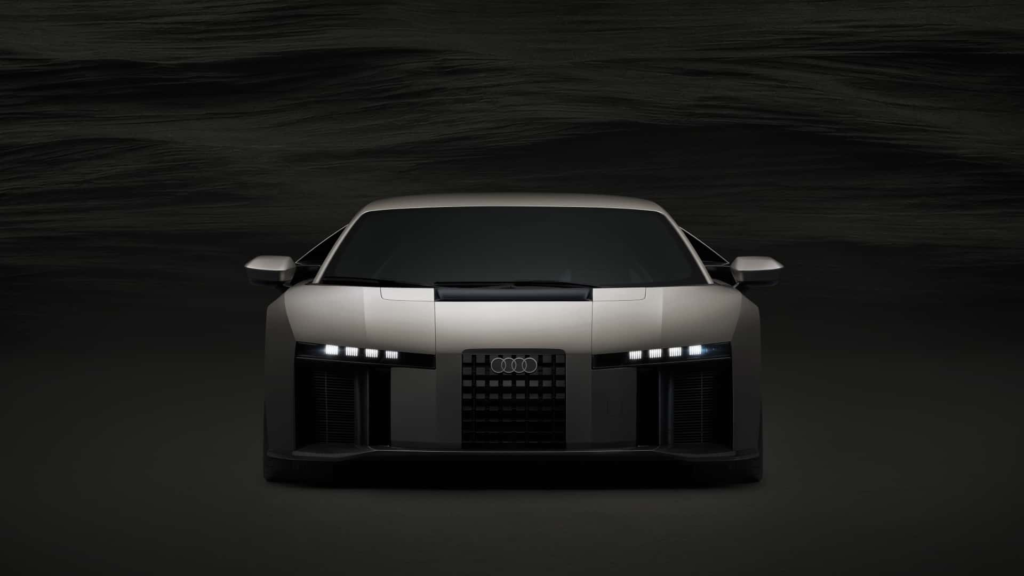
Its body is wide, low and aggressive, with a distinctive front end and a heavily sculpted rear section. The design avoids simply copying Audi’s previous R8 formula and instead establishes a different visual identity for the company’s next generation of high-performance vehicles.
Audi’s own historical record shows that its previous Nuvolari quattro concept was also used to preview future design and production ideas. The 2026 model therefore carries a name with an interesting connection to Audi’s performance-car history. (audi.com)
Why Only 499 Cars?
The Nuvolari will not become a common sight on public roads.
Audi plans to limit production to 499 units, making the car an exclusive flagship for the brand. Industry reports have placed the expected price around the £500,000 mark, although Audi’s official June announcement did not provide a final retail price. (Honest John)
The limited production strategy also gives Audi an opportunity to experiment with advanced technologies and manufacturing techniques without attempting to introduce them immediately across a high-volume model range.
For collectors, the combination of limited production, extreme performance and a completely new design philosophy could make the Nuvolari particularly significant.
From Prototype to Production
Perhaps the most important part of the Nuvolari story is what happens after the 405-day development sprint.
Audi has already moved beyond the unveiling stage. Prototype vehicles are undergoing testing around the world, including at demanding racetracks and proving grounds. The company says these tests are being used to continuously evaluate and optimize the car’s performance. (audi.com)
The first customer deliveries are planned for the first half of 2027, while European orders are expected to open during the fourth quarter of 2026. (audi.com)
That means the 405-day achievement is not the end of the project. It is the beginning of another phase in which Audi must prove that its accelerated development process can deliver the reliability, performance and quality expected from a limited-production supercar.
What the Nuvolari Means for Audi
The Audi Nuvolari is significant for more than its horsepower figures.
Audi has spent decades building its reputation around engineering, technology and quattro all-wheel drive. The new Nuvolari takes those themes and combines them with hybrid performance, active aerodynamics, carbon construction and technologies influenced by motorsport.
Most importantly, the project demonstrates a different development philosophy. Audi wants to show that a major manufacturer can move from an idea to a production-ready performance vehicle at extraordinary speed without abandoning technical ambition.
The 405-day timeline may ultimately become one of the most memorable parts of the Nuvolari story.
Final Thoughts
The Audi Nuvolari is a remarkable combination of speed, technology and development ambition. Built from a blank sheet to a production-ready prototype in only 405 days, it represents one of Audi’s boldest recent attempts to redefine its performance-car identity.
With 1,001 PS, three electric motors, a 4.0-liter twin-turbo V8, predictive quattro all-wheel drive, active aerodynamics and carbon-fiber construction, the Nuvolari is far more than a styling exercise. (audi.com)
Limited to 499 examples and scheduled to reach customers in 2027, it will remain an exclusive machine. But its biggest impact could extend beyond those 499 cars. The real legacy of the Nuvolari may be the faster development philosophy behind it—and the technologies Audi eventually transfers to future road cars.
